REVIEW · OUTBACK QUEENSLAND
Bladensburg National Park Half Day Tour
Book on Viator →Operated by Red Dirt Tours · Bookable on Viator
Jump-ups and stories make Bladensburg unforgettable. This half-day outing in Queensland pairs Koa Aboriginal heritage with sheep-station chapters, then lines you up with Scrammy Gorge views that stretch out for miles.
I love how the tour mixes people and place: you’ll spend time at the old shearing shed and homestead area, plus get context for how grazing changed the land. I also like the comfort and pacing, with pickup offered, a fully air-conditioned vehicle, and a small group size capped at 16.
One thing to consider: this is a short 4-hour experience, and it needs good weather, so it’s best if you’re happy with a focused highlights route rather than a slow, linger-all-day hike.
In This Review
- Key things that make this tour worth your time
- Bladensburg National Park: Jump-ups, Gorges, and Koa Country
- Getting There in Comfort: Pickup, A/C Vehicle, and a Calm Group Size
- Old Shearing Shed to Homestead: How the Station Days Still Show
- Scrammy Jump-up, Gorge, Waterhole, and a Lookout That Really Pays Off
- Wildlife Lessons: Spotting Rare Species Without Feeling Like You Need a Textbook
- Price and Value: Is $71.72 Fair for a 4-Hour Half Day?
- Timing and Weather: When the Outback Story Looks Its Best
- Who This Tour Fits Best (and Who Might Want Something Different)
- Should You Book the Bladensburg National Park Half Day Tour?
- FAQ
- How long is the Bladensburg National Park half-day tour?
- What time does the tour start?
- How much does the tour cost?
- Is pickup included?
- Is the tour in an air-conditioned vehicle?
- How many people are in the group?
- What will I see during the park portion?
- Is the admission ticket included?
- Is confirmation provided after booking?
- Are there any weather considerations?
Key things that make this tour worth your time
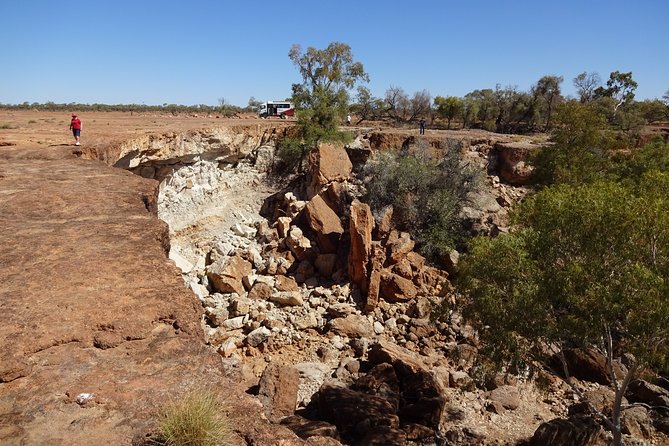
- Koa Aboriginal heritage plus sheep-station leftovers you can still see in the buildings and site interpretation
- Scrammy jump-up, gorge, waterhole, and lookout for outback scale without a full-day grind
- Fully air-conditioned transport with pickup, so the day stays easy even in hot conditions
- Small group limit (16 people), which keeps questions and conversation flowing
- Time with the National Park Information Centre before you head out to the lookouts
- Admission ticket is free for the park portion, which improves the value
Bladensburg National Park: Jump-ups, Gorges, and Koa Country
Bladensburg National Park has the kind of setting that makes you pause. The terrain is built from sandstone and mesas, and those sharp “jump-ups” help shape where plants grow, where animals move, and where you get those big-sky views from above.
What makes this tour special is how it frames the land. You’re not just looking at scenery; you’re learning about the Koa Aboriginal people and how the area was later taken over as a sheep station, then returned to nature as a national park in the 1980s. That time-switching story gives you a better eye for what you’re seeing—human use, then land recovery.
The result is a half-day that feels like more than a drive. It’s a quick crash course in how the outback works, both ecologically and culturally, from desert heat and deep gorges to the waterholes that keep life going.
Getting There in Comfort: Pickup, A/C Vehicle, and a Calm Group Size
This is one of those tours where logistics don’t get in the way. Pickup is offered, and you ride in a fully air-conditioned vehicle, which matters in Queensland when the morning sun starts warming up fast.
The group size cap of 16 is a quiet advantage. It’s small enough that guides can actually tailor explanations to what you’re curious about—especially when they’re talking about rare and endangered wildlife in the region. It also helps keep the day relaxed at each stop, rather than turning into a rush job.
Start time is listed as 8:30am, and the experience is about 4 hours total (approx.). In other words, it’s short enough to fit into a travel plan without sacrificing the outback experience.
Old Shearing Shed to Homestead: How the Station Days Still Show

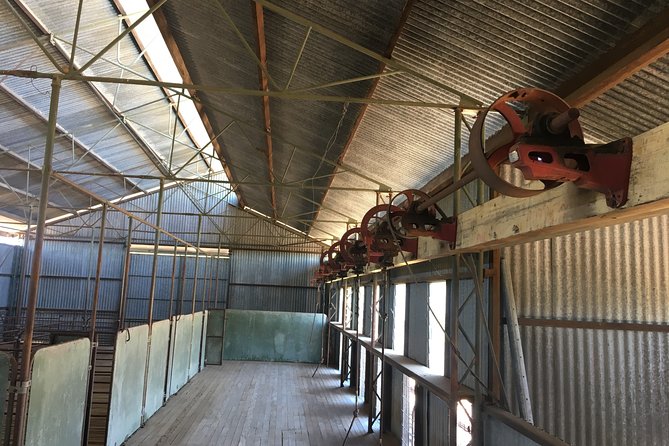
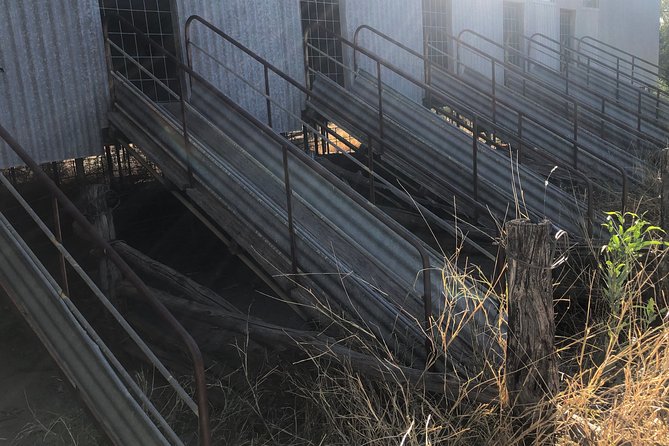
The tour begins at Bladensburg National Park, where you start with grazing and Indigenous history context. You’ll visit the old shearing shed and the homestead area, and you’ll also spend time at the National Park Information Centre.
For me, this is the most grounded part of the trip. Buildings like a shearing shed are physical clues. They let you imagine how the station operated—how people worked the land, what “grazing” meant on the ground, and why returning the area to parkland in the 1980s mattered.
The guide-led story is built to connect the dots: what the land was used for, how that use changed the environment, and what “returned to nature” can look like when protection and time do their work. Even if you usually skip history stops, this one tends to land because it’s tied to visible structures and a real sense of place.
If you love learning from local voices, you may also hear their own familiar style. In past groups on this route, guides such as Bec, Jo, Jamie, and Vicki have led the drive and shared what they know about the property and surroundings—particularly how the country changes with the seasons and weather.
Scrammy Jump-up, Gorge, Waterhole, and a Lookout That Really Pays Off
After the station-and-people context, you head to the highlight country: Scrammy jump-up and the gorge, waterhole, and lookout route.
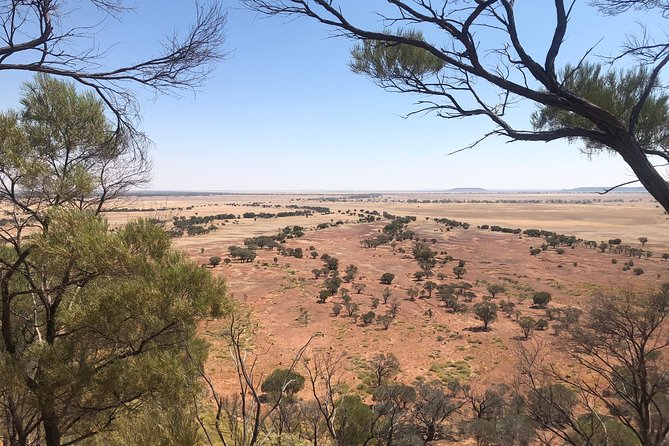
Jump-ups are a big deal in this kind of terrain. They’re natural “positioning points” that let you see further and understand the shape of the area. From the lookout, you get that sense of outback scale—desert, gorges, and sandstone forms stretching out so far you lose the “nearby only” feeling and start thinking in horizons.
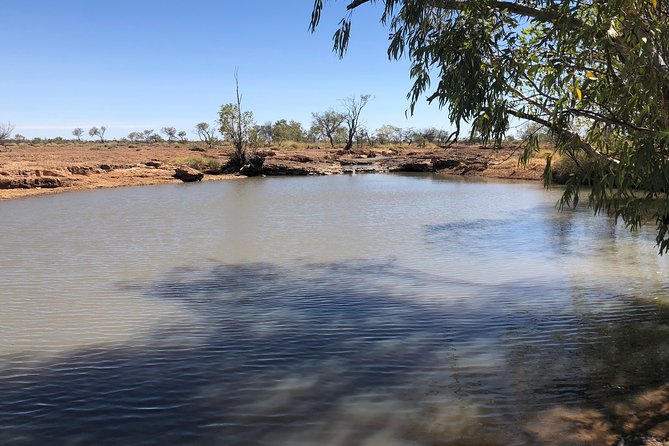
The gorge and waterhole portion is where the scenery turns practical. A gorge isn’t just a view; it changes airflow, shade, and how animals move and feed. Waterholes in the outback can be lifelines, so it’s worth paying attention when your guide talks about wildlife presence and survival strategies. Even without specific species listed, the talk is aimed at helping you notice patterns and habitats.
There’s also a nice seasonal factor. One guide-led drive included a June period after heavy rains, and the landscape had fresh growth and looked wonderfully different. If you time your visit around weather shifts, you can get a more dramatic contrast between dry-country expectations and what the park can look like when it’s had water.
A small caution: because you’re doing viewpoints plus gorge and waterhole stops, comfortable shoes matter. Expect uneven ground at times and a day that mixes short walks with longer standing and looking.
Wildlife Lessons: Spotting Rare Species Without Feeling Like You Need a Textbook
One of the most praised parts of this experience is the way guides talk about the region’s rare and endangered wildlife. The point isn’t to turn you into a scientist. It’s to help you understand what you’re actually looking at—what kind of habitat supports certain animals, and why those outback features matter.
When the guide points out what to watch for, you’ll get more out of every stop:
- You’ll notice how water and shade shape where life concentrates
- You’ll start reading the terrain, not just admiring it
- You’ll understand why some animals rely on specific conditions that can shift with weather
This is also where small group size helps again. With fewer people, you can ask follow-up questions and get answers that match what you’re seeing right in front of you—rather than hearing generic facts that don’t connect to the ground.
If you’re traveling with kids or anyone who likes animals, this is the kind of tour that keeps attention. You get scenery, but you also get a reason to look closer.
Price and Value: Is $71.72 Fair for a 4-Hour Half Day?
At $71.72 per person, this tour sits in a mid-range band for outback day tours. Here’s why it can feel like good value: pickup is offered, you’re in a fully air-conditioned vehicle, and you’re getting guide-led storytelling plus multiple defined stops with real interpretation.
There’s also a specific value boost you don’t want to ignore: the park portion includes an admission ticket that’s free. That means you’re not paying twice for the core experience.
So what are you paying for, in practical terms?
- Guided interpretation (Indigenous history, station history, and wildlife info)
- Transportation that keeps you comfortable
- A compact schedule that still hits Scrammy jump-up, gorge, waterhole, and a lookout
Is it pricey? Compared to self-driving, yes. Compared to a guided experience that bundles transport + interpretation + multiple stops in a short window, it holds up well—especially if you don’t want to spend your day figuring out the route and deciding what’s worth your time.
Timing and Weather: When the Outback Story Looks Its Best
This tour depends on good weather. That’s not just a comfort issue; it affects safety and how enjoyable the viewing points are.
If you go when conditions are right, you’ll get the best “sense of place.” You’ll be able to enjoy the lookout properly, and you’ll likely have an easier time with short walks around gorge and waterhole areas.
If conditions include heavy rain beforehand, expect noticeable changes. In one recent season, new growth after heavy rains made the countryside look fresh and lively, which helps you see how quickly the outback can shift when water is around.
Because it’s an early-morning start, it’s smart to dress in layers. Even in warm months, mornings can feel cooler than the midday sun once you’re out in the open.
Who This Tour Fits Best (and Who Might Want Something Different)
This works best if you want:
- A guided outback experience without committing to a full day
- A blend of Indigenous history, station history, and nature interpretation
- Viewpoints that reward you quickly, including a far-reaching lookout
- Comfortable transport via a fully air-conditioned vehicle and pickup
You might look for a different style of tour if you prefer deep, all-day hiking with lots of free time. This one is built for highlights and stories, not long unhurried wandering.
It also makes sense if you’re the kind of traveler who likes learning but hates feeling stuck in a lecture. The information is tied to what you’re actually seeing at each stop.
Should You Book the Bladensburg National Park Half Day Tour?
If your goal is to get real outback context in a short time, I think this is a strong choice. The combination of Koa history, the shearing shed and homestead framing, and the Scrammy jump-up/gorge/waterhole sequence makes it feel purposeful, not just scenic.
Book it if you’ll appreciate guided interpretation and want that “see it and understand it” feeling. Skip it only if you dislike structured schedules or you’re set on spending hours roaming without stops.
One last tip for a great day: bring comfortable footwear and come ready to look closely. The more you treat the jump-ups, gorge shadows, and waterholes as clues, the more the whole tour clicks.
FAQ
How long is the Bladensburg National Park half-day tour?
The tour runs for about 4 hours (approx.).
What time does the tour start?
The start time is 8:30am.
How much does the tour cost?
The price is $71.72 per person.
Is pickup included?
Pickup is offered.
Is the tour in an air-conditioned vehicle?
Yes, the ride is in a fully air-conditioned vehicle.
How many people are in the group?
The tour has a maximum of 16 travelers.
What will I see during the park portion?
You’ll visit Bladensburg National Park, including the old shearing shed and homestead area with the National Park Information Centre, then head to Scrammy jump-up plus the gorge, waterhole, and lookout.
Is the admission ticket included?
The park admission ticket is free for the park portion.
Is confirmation provided after booking?
Confirmation is received at the time of booking.
Are there any weather considerations?
The experience requires good weather, and if it’s canceled due to poor weather, you’ll be offered a different date or a full refund.