REVIEW · GRAND CANYON NATIONAL PARK
4-Hour Biblical Creation + Sunset Tour • Grand Canyon National Park South Rim
Book on Viator →Operated by Canyon Ministries Christian Tours · Bookable on Viator
Sunset at the rim, with Genesis in the backseat. This 4-hour South Rim tour from Canyon Ministries frames the canyon through the biblical creation story and the Flood, then times your drives and stops so you watch the light change at the exact moment it matters.
I love the small group limit of 12, which keeps the schedule from feeling frantic, and I love the practical add-ons: bottled water, binoculars, blankets, and umbrellas in an air-conditioned vehicle.
One possible drawback: the teaching is explicitly biblical creation and Flood-focused, and it can get argumentative about mainstream geology. If you want a neutral, purely scenic tour, this might feel too faith-forward.
In This Review
- Key highlights you’ll care about
- Meeting at the Visitor Center flagpole, before the park gets crowded
- A comfortable ride along Desert View Drive on the east side
- Stop-by-stop: how the tour builds the Creation and Flood theme
- Yavapai Point: starting with Genesis and setting up the geology
- Grandview Point: Wild West stories and the distant Colorado River
- Lipan Point: rapids, Pueblo life below, and rock layers tied to the Flood
- Navajo Point: the “lake spillover” idea, plus watchtower history
- Moran Point: the best seat for sunset, plus time for reflection
- Where the tour feels like value at $149
- Who should book, and who should skip
- Practical tips to make the rim part actually comfortable
- Should you book Canyon Ministries Sunset Rim tour?
- FAQ
- How long is the Grand Canyon Biblical Creation + Sunset Tour?
- Where do I meet for the tour?
- What parts of the South Rim will we see?
- Is park entry included in the price?
- What’s included with the tour price?
- How many people are in each tour?
- What happens if the weather is bad?
- When can I cancel for a full refund?
Key highlights you’ll care about
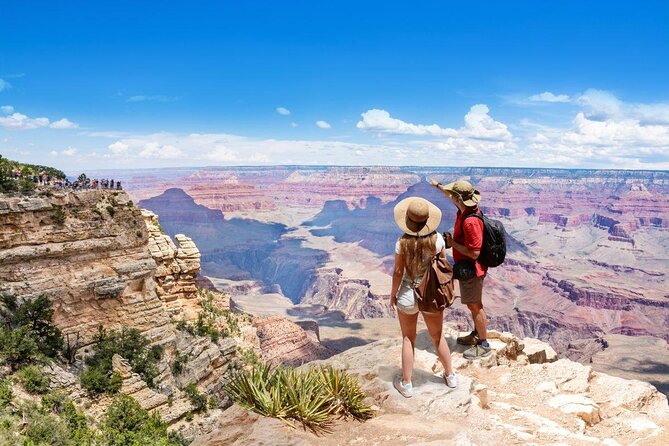
- A sunset schedule built around variable daylight so the final rim moment lands at the right time
- An 12-person cap that helps you actually hear explanations and ask questions
- Desert View Drive on the South Rim east side with multiple high-value overlooks
- Stop-by-stop biblical teaching tied to geology, wildlife, and canyon history
- Weather support you’ll feel with umbrellas, blankets, and a warm vehicle
- Guides that adjust on the fly when crowds, weather, or your group’s interests change the plan
Meeting at the Visitor Center flagpole, before the park gets crowded
The tour starts inside Grand Canyon National Park at the Grand Canyon Visitor Center flagpole, right at your scheduled start time, about four hours before sunset. The meeting point matters because it puts you in motion early, before the late-afternoon rush builds.
Plan extra arrival time in spring and summer, especially around holidays and spring break when entry lines can stretch. If you arrive early, I’d use that time to grab an easy warm-up view from Grand Canyon Village, Mather Point, or a quick rim trail walk before you join the group.
Also note: the tour does not include the park entry fee. You can pay at the gate or use a National Park Pass (good for unlimited entry for 7 days). This is the one “logistics” cost you’ll need to budget separately.
A comfortable ride along Desert View Drive on the east side
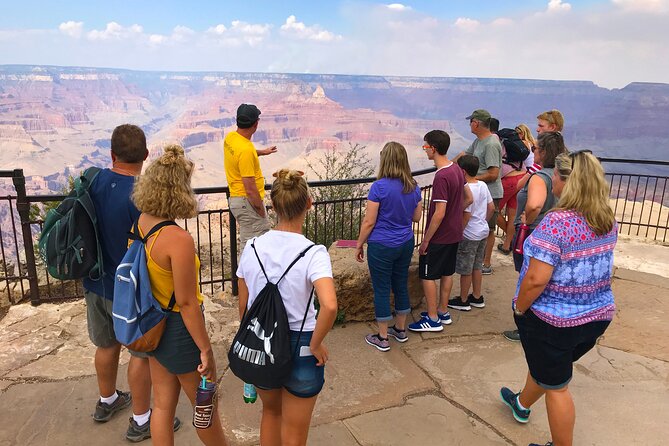
This is a real drive-and-stop tour, not a hike. You’ll travel in an air-conditioned vehicle with bottled water, and you’ll get binoculars for the overlooks. If weather turns, umbrellas and blankets are included, which is a big deal at the rim where conditions can shift fast.
The route focuses on the South Rim east side along Desert View Drive, with time allocated at each stop to step out, look around, and hear the teaching. Because the tour isn’t scripted, you may get alternate overlooks depending on weather, seasons, and crowd flow. That flexibility is helpful when you’re trying to see the canyon without spending half your day stuck in lines.
Guides lead from the vehicle into the viewpoints, and many groups appreciate the way the plan can be tailored to what you’ve already seen. Names that come up often in guide-led experiences on this program include Eddy, David, Bob, Dana, Emilia, Amelia, and others, with an emphasis on Q&A and pacing that doesn’t feel like a rush job.
Stop-by-stop: how the tour builds the Creation and Flood theme
The tour uses a steady rhythm: foundational teaching early, then geology and canyon details, then the sunset finale. You’re not just getting points on a map—you’re being guided through a story lens, with each overlook tied back to the biblical account of Creation and the Flood.
A key point for your expectations: the interpretation is intentionally creation-and-Flood framed. Even when the talk gets technical—rocks, layers, erosion mechanisms—it’s still aimed at connecting what you see to that specific worldview.
If you like learning by comparison, you’ll likely enjoy the way the guide points to observable features at each stop. If you dislike debate, you may still enjoy the views, but you’ll want to go in knowing the explanation style leans firm.
Yavapai Point: starting with Genesis and setting up the geology
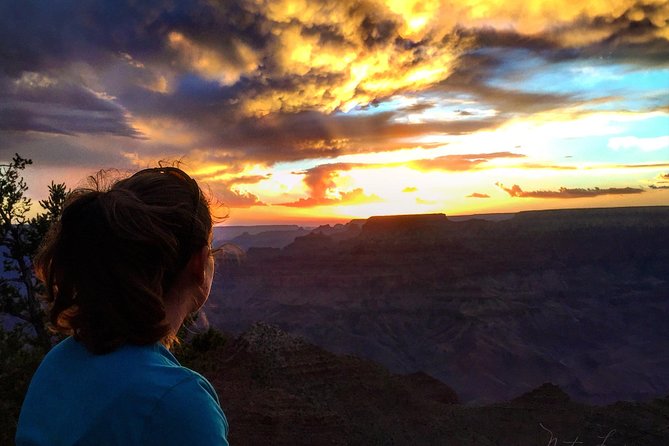
Your first major viewpoint stop is Yavapai Point, starting near the visitor area. This is where the tour lays groundwork: the canyon’s geology, the significance of the Flood in Genesis, and why the guide believes the rock record can be read in that light.
Expect about a half hour here. It’s enough time to take in the canyon panorama without feeling rushed, then switch into explanation mode as the guide connects what you’re seeing to the bigger story the tour will keep returning to.
If this is your first trip to the Grand Canyon, this stop is a smart launch point. It gives you a framework so later overlooks make more sense beyond the obvious “wow” factor.
Grandview Point: Wild West stories and the distant Colorado River
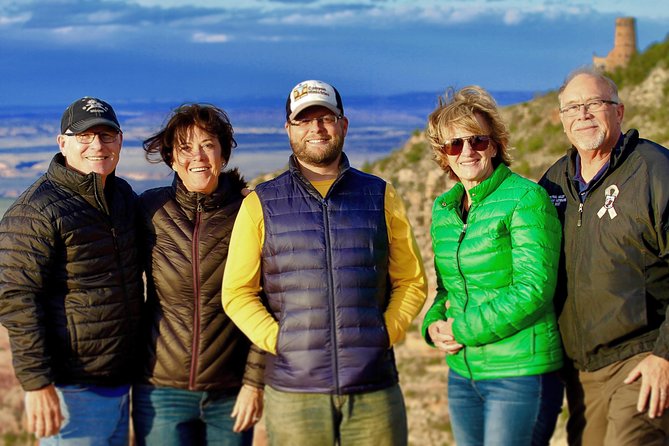
Next up is Grandview Point, where the focus shifts from the early “big picture” to more human history. You’ll hear about Wild West-era people connected to the area, including mining for copper and the idea of tourist pockets during early Grand Canyon Park development.
You’ll also get wide vistas and a look toward the distant Colorado River as the guide discusses what role the river may play in removing or cutting through material. It’s a good stop if you like when nature history and human history get braided together.
Time here is about 30 minutes. That’s enough to settle in for the view, then still have time to look for details the guide points out.
Lipan Point: rapids, Pueblo life below, and rock layers tied to the Flood
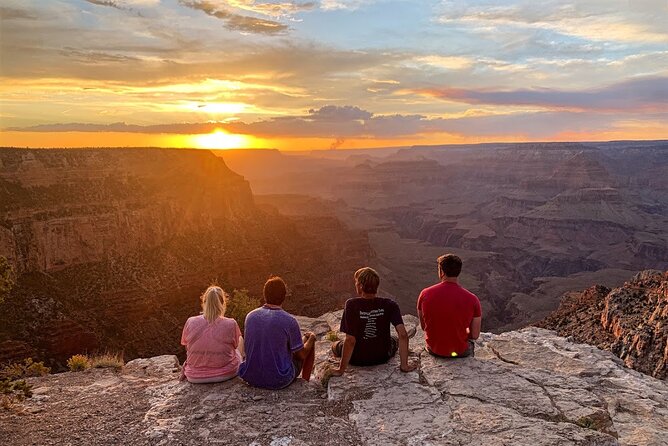
Lipan Point is one of the most content-heavy stops. You’ll take in fantastic river views, including one of the canyon’s larger rapids, while the guide brings in the Native American Ancestral Puebloans who lived far below on the Unkar Delta.
Then the teaching gets very geology-forward. At Lipan Point, you’ll hear about features the guide uses as visible evidence for the Flood, including the Great Unconformity, the Cambrian Explosion, and the Tapeats Sandstone. The explanation focuses on mechanisms of Flood-related deposition—described as fast, destructive, and global in scale.
You’ll get about 45 minutes at this stop, and that extra time helps if the geology is new to you. It’s also a stop where questions can really take off, especially if your group likes to compare scientific claims.
One practical thought: this is the part of the tour where cold or wind can feel real. The umbrellas and blankets help, but layered clothing still makes the whole experience easier.
Navajo Point: the “lake spillover” idea, plus watchtower history
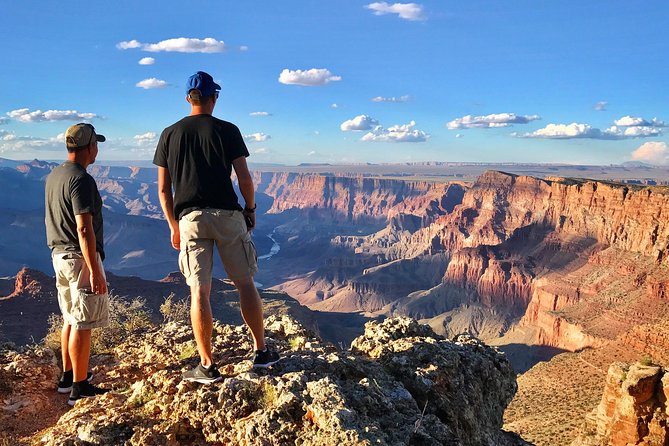
At Navajo Point, the theme is water, in a little bit of time. The guide explains what they call the lake spillover or breached dam model for carving the Grand Canyon, and frames it as something that creation-friendly geology also considers.
You’ll look out toward distant Vermillion and Echo Cliffs of the Marble Platform, and southeast toward parts of the Painted Desert. That wider geographic context helps you stop thinking of the canyon as a single hole in the ground and start seeing it as part of a larger system.
Time here is about 30 minutes. You’ll also hear about the nearby historic Desert View Watchtower, completed in 1932—small human detail that adds weight to the big view.
Moran Point: the best seat for sunset, plus time for reflection
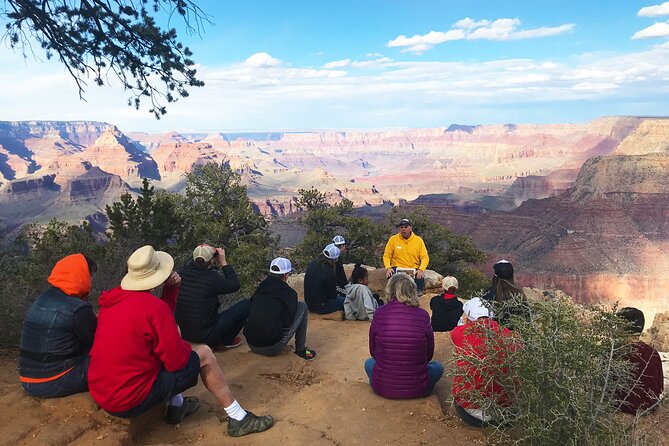
The tour ends at Moran Point, one of the better spots for watching the sun sink below the cliff walls to the west. This final stop is about 45 minutes, and it’s built to give you breathing room—enough time to sit, relax, and actually enjoy the moment instead of sprinting to the next platform.
Blankets are available here, and the vehicle gives you warmth if the weather turns cold. On some days, wildlife sightings happen too; you might even catch a bull elk sighting while you’re focused on the rim.
This ending also leans spiritual. The tour closes by directing attention toward the One who made it as the sun sets. Many groups appreciate the slower pacing, and guides often make room for personal quiet time. Some groups also report moments like group prayer or other reflective pauses—so if that fits your style, you’ll probably feel at home.
Where the tour feels like value at $149
At $149 per person for about 4 hours, you’re paying for more than just a ride to viewpoints. You’re buying: transport in an air-conditioned vehicle, interpretation at multiple overlooks, and included comfort gear like binoculars, bottled water, blankets, and umbrellas.
The total number of stops is high enough that you’re not just getting one photo moment—you’re getting a full “rim education” arc from early geology setup to a sunset finale. With a maximum of 12 people, you also avoid the feeling of being trapped in a huge tour bus where you can’t hear or ask questions.
What you should factor in is the park entry fee, which is not included. Also, gratuity for your guide is not included. Once you add the park entry, it’s wise to decide whether you’d rather spend the time cost on guided interpretation or on self-driving with no structured teaching.
For families, couples, and first-timers, this format can be a strong value because it reduces driving stress and turns the Grand Canyon into a learning experience tied to the worldview you care about.
Who should book, and who should skip
Book this if you want the Grand Canyon with a biblical Creation and Flood lens and you’re open to geology explained in support of that interpretation. It’s also a great fit if you like discussion, hands-on looking (binoculars help), and a sunset ending that doesn’t feel rushed.
It’s less ideal if you’re looking for a strictly neutral science presentation or if you strongly prefer explanations without debate. The teaching style can be persuasive and direct, and some people may find that intensity distracting from the scenery.
If your group includes kids, this tour can work well because the format gives frequent viewpoint breaks and the guide often answers questions on the spot. Just remember: the content is a mix of scripture and earth science, so you’ll want everyone to be game for both.
Practical tips to make the rim part actually comfortable
Bring layers. Even when you plan for a sunset, the rim can run cold, and rain can pop up too. The tour includes umbrellas and blankets, but layers give you flexibility if the weather changes mid-tour.
Give yourself buffer time for park entry, especially in busier seasons. The tour starts at a precise meeting moment, and late arrival can snowball into stress.
Finally, don’t be shy with questions. This tour is built around teaching stops, and the guides running this program often use the time at viewpoints to answer curiosity in the moment.
Should you book Canyon Ministries Sunset Rim tour?
If you want a guided Grand Canyon experience with a clear biblical framework and you’ll appreciate multiple geology-linked overlooks, this is a strong booking. The small group size, included comfort gear, and sunset timing make it easy to do without turning your day into a parking-lot puzzle.
Skip it only if you prefer a neutral presentation of canyon geology and don’t want the discussion to argue for a creation-and-Flood interpretation. If your ideal Grand Canyon day is calm scenery with no structured worldview, you’ll likely feel more satisfied with a different type of tour.
FAQ
How long is the Grand Canyon Biblical Creation + Sunset Tour?
It’s about 4 hours, but the exact length is variable based on when sunset happens that day. The plan is to be back about 30 minutes after sunset.
Where do I meet for the tour?
You meet at the Grand Canyon Visitor Center flagpole, inside Grand Canyon National Park, at the start time listed for your tour.
What parts of the South Rim will we see?
The tour travels along the South Rim’s east side on Desert View Drive and includes stops such as Yavapai Point, Grandview Point, Lipan Point, Navajo Point, and Moran Point.
Is park entry included in the price?
No. Park entry is not included, and you’ll need to pay at the gate or use a National Park Pass.
What’s included with the tour price?
Included items are bottled water, blankets, umbrellas, binoculars, and an air-conditioned vehicle. You also get a mobile ticket and the tour is offered in English.
How many people are in each tour?
This experience has a maximum of 12 travelers.
What happens if the weather is bad?
The tour requires good weather. If it’s canceled due to poor weather, you’ll be offered a different date or a full refund.
When can I cancel for a full refund?
You can cancel up to 24 hours in advance for a full refund. If you cancel less than 24 hours before the experience starts, the amount you paid will not be refunded.