REVIEW · HOKKAIDO
2hours Drift ice walk guided tour in Shiretoko National Park
Book on Viator →Operated by Picchio Shiretoko · Bookable on Viator
Drift ice walking feels unreal. In Shiretoko National Park’s Utoro area, you get to step onto the sea ice in winter dry suits designed for both warmth and buoyancy, guided with a strong focus on safety. It’s one of those rare experiences where the setting does most of the talking, and the tour helps you experience it without turning it into a stressful scramble.
I also love the tour’s 360° approach to viewing, not just walking. The guide encourages you to use your camera in all directions—up toward the sky for broad views, and down to the ice-world below—then layers in animal-focused ways of looking, including perspectives tied to an eagle and to clione. And if conditions line up, you may spot wildlife that depends on this frozen habitat.
The main consideration is simple: this depends on stable ice. The drift ice window is only about 1.5 months in the coldest part of the season, and if weather and sea conditions don’t cooperate (including days when drift ice isn’t present), the operator may switch to other options or offer a different date or a refund.
In This Review
- Key Highlights You’ll Actually Notice
- Drift Ice Walk in Shiretoko: why 2 hours feels special
- Utoro-Shirietoku meeting point and the start of your ice day
- Dry suits, not guesswork: getting ready for warmth and buoyancy
- On the ice: what the guided walk actually centers on
- 360° viewing: cameras, eagle-eye moments, and clione perspective
- Wildlife and drift ice: why stepping on the ice changes the whole experience
- When conditions disappoint: what happens if there’s no drift ice
- Price and value: is $54.08 worth it?
- Who should book this drift ice walk (and who should skip it)
- Should you book the 2-hour Drift Ice Walk?
- FAQ
- How long is the drift ice walk tour?
- What does the tour cost?
- Where do I meet the group?
- Is pickup offered?
- Is there a mobile ticket?
- What are the age and body requirements?
- What if the weather is bad?
- How big is the group?
- Do I need special gear to join?
Key Highlights You’ll Actually Notice
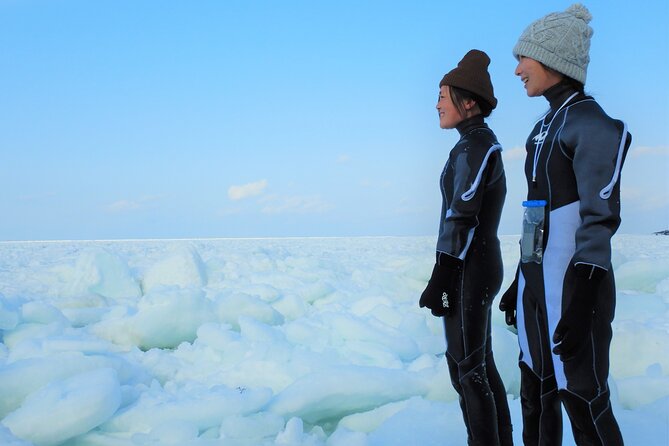
- Small group size (max 8 travelers) helps keep the experience calm and safety-focused on the ice.
- Dry suits with heat retention and buoyancy mean you’re not trying to survive the cold in regular winter gear.
- The 360° viewing theme turns photos and spotting into part of the route, not an afterthought.
- Wildlife-centered drift ice viewing connects the activity to why the ice matters in Shiretoko.
- Utoro area timing: drift ice walking is only available for roughly 1.5 months when the ice is stable.
Drift Ice Walk in Shiretoko: why 2 hours feels special
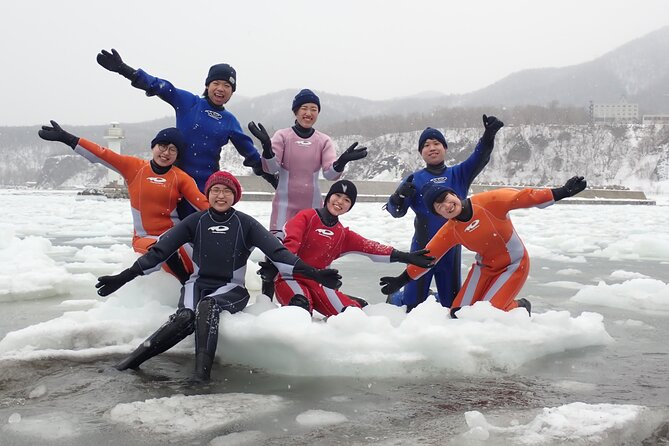
Shiretoko is famous for wild nature, but drift ice makes it different. Here, the sea isn’t just icy—it’s actually carrying a whole mini-ecosystem, and your boots go onto the same platform that wildlife relies on.
This tour is built for the midwinter window when Shiretoko’s seas are covered in ice, and the drift ice is stable enough to walk on. That limited timing is a big part of why the experience is so sought after, even though it lasts around 2 hours.
You can also read our reviews of more tours and experiences in Hokkaido.

Utoro-Shirietoku meeting point and the start of your ice day
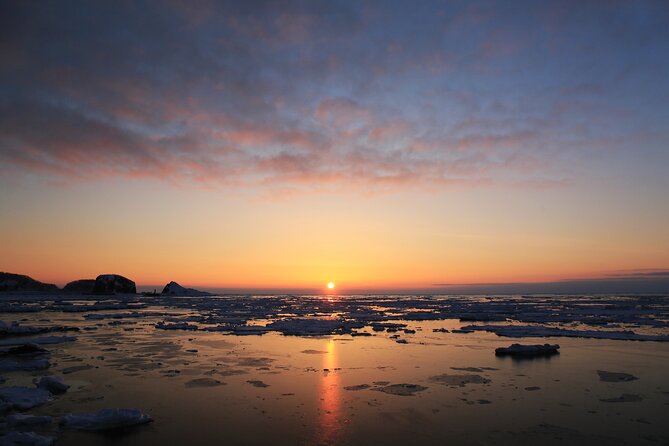
You meet at the Roadside Rest Area Utoro-Shirietoku (186-8 Utoronishi, Shari, Shari District, Hokkaido). The location is described as near public transportation, which matters in a place where winter schedules can be tighter than you expect.
Pickup is offered, so if you’re staying nearby you might be able to reduce the hassle of getting to the meeting point. Either way, plan to arrive with enough time to settle in and follow the group’s instructions before you get anywhere near the ice.
Group size is small—up to 8 people—which usually makes check-in feel more like a guided briefing than a fast-moving lineup. And since you use a mobile ticket, you’ll want your phone charged and ready, not buried under gloves.
Dry suits, not guesswork: getting ready for warmth and buoyancy
The core of this tour is the specialized dry suit. It’s designed for cold and wet conditions, with strong heat retention and buoyancy, so you can focus on walking and looking instead of constantly second-guessing your body temperature.
One review mentioned that participants usually don’t need to bring much besides what they’d wear normally—so you’re not signing up for a long shopping list. In practice, I’d still treat this as a winter outing: wear practical layers under what the operator gives you and save your energy for the ice.
There are clear physical requirements too. The tour is for ages 6 to 75, with a height range of 130 cm to 190 cm, weight up to 110 kg, and a requirement for moderate physical fitness. You also need to be able to follow instructions and practice self-safety-control, because the whole point is walking on sea ice safely.
On the ice: what the guided walk actually centers on
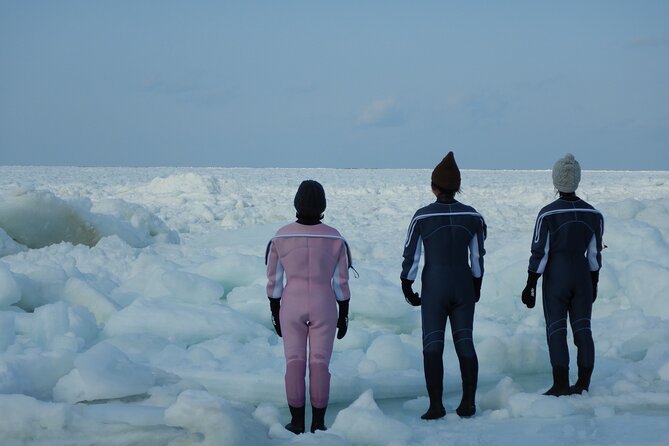
The walk itself is the main event, but it’s not a free-for-all. You’re led onto the drift ice in winter dry suits, and the guide’s job is to keep the group moving safely while also helping you notice what’s happening around you.
What you should expect is a guided sequence of viewing moments. The “Drift Ice Walk” theme is 360°, so you’ll be encouraged to look in every direction as you go—around, above, and down toward the ice surface and its underside.
The walking is also tied directly to the wildlife story. Drift ice isn’t decorative here; it’s indispensable for animals living in Shiretoko. When you step onto it, you’re stepping into the same icy world those animals depend on.
360° viewing: cameras, eagle-eye moments, and clione perspective
This tour has a neat trick: it trains your attention. Instead of telling you to just enjoy the scenery, the guide points you toward how to see—how to frame the ice, how to scan the environment, and how to recognize signs of life.
The company describes the experience as looking through the eyes of an eagle, and also through the eyes of a clione. That matters because it pushes you to think like a creature in this environment, not like a tourist holding a camera.
You’ll use cameras and images to look around you, including views up toward the sky. You’ll also be guided to look into the world under the ice, which is where a lot of the wow factor lives. If you’re lucky, you may actually meet clione, which is the kind of “only here” wildlife that turns a winter walk into a memory you keep for years.
And yes, the photography part is real. One reviewer said they were looking forward to the pictures, and another felt the experience was amazing because the guide helped them make the most of the moment. In other words: you’re not just bundled up and sent out. You’re guided so you capture what makes Shiretoko ice special.
Wildlife and drift ice: why stepping on the ice changes the whole experience
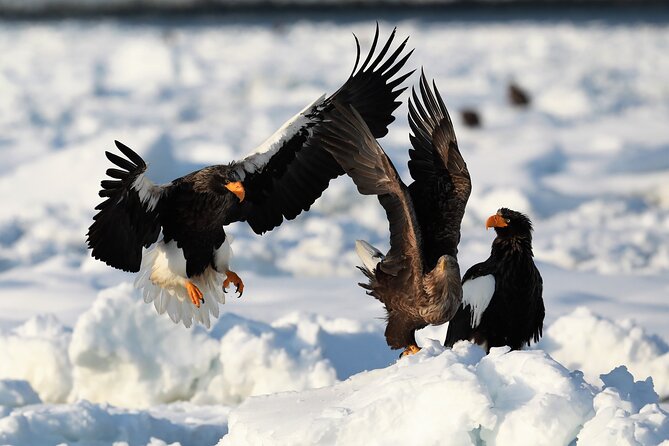
The strangest thing about this tour is how quickly you start thinking of drift ice as habitat. It’s not just a frozen surface. In Shiretoko, drift ice is described as essential for wildlife, which means your steps are part of a bigger natural system.
That’s why the tour only exists during a narrow seasonal window. Drift ice walking is available only about 1.5 months in the Utoro area when the ice is stable. Outside that window, the risk level changes and the experience can’t happen in the same way.
When you’re on the ice, that fact clicks. You see how the sea ice creates a stage for animals to move through and live around. Even if you don’t spot everything, the guided explanation helps you connect the visuals to the ecology.
When conditions disappoint: what happens if there’s no drift ice
Here’s the honest part. This activity requires good weather and relies on stable drift ice. One review called out a day when there was no drift ice, and the company apologized and offered other alternatives. Another theme in the feedback is that the operator communicated and kept guests informed rather than leaving people guessing.
So, what should you do as a traveler? Treat drift ice walking as a conditions-based experience, not a guaranteed photo shoot. If the weather or ice isn’t right, the operator may switch plans, offer a different date, or issue a full refund if the experience is canceled due to poor weather.
This is also where global warming can show up in the real world. The point isn’t to scare you—it’s to help you set expectations: you’re paying for access to a rare window, and nature controls the script.
Price and value: is $54.08 worth it?
At about $54.08 per person for roughly 2 hours, the price looks straightforward, but the value is in what’s included and what you can’t easily replicate.
First, you’re paying for specialized dry suits made for cold and wet conditions, plus the setup that lets you wear them confidently. Second, you’re paying for guided management of safety on sea ice, including instruction and group control. Third, you’re paying for access to a seasonal window—around 1.5 months—where drift ice walking is possible in Utoro.
There’s also evidence of demand: on average, this is booked about 98 days in advance. That’s usually a clue that people are trying to lock in a rare-season activity while dates are still available.
For me, the math works best if you’re the kind of traveler who wants your trip to include a truly location-specific experience rather than another “nice view” stop. If you want certainty every day, you’ll need to keep one flexible mindset and accept that weather can change outcomes.
Who should book this drift ice walk (and who should skip it)
This tour is a good fit if you:
- Can manage moderate physical fitness and will keep up with guide instructions.
- Are comfortable following safety rules in a winter environment.
- Want wildlife-focused viewing tied to Shiretoko’s drift ice ecosystem.
- Like guided structure, especially for photography and scanning (because the 360° approach helps a lot).
It’s also designed for a wide age range, from 6 to 75, and the group stays small. That can be a great family option if the child meets the height requirement and the adults can handle cold-season logistics.
I’d skip it if you’re unsure about your ability to follow strict instructions and practice self-safety-control. Sea ice isn’t the place for improvising, and the tour is explicit that you need to cooperate with the guidance process.
Should you book the 2-hour Drift Ice Walk?
If you’re visiting Hokkaido in midwinter and you’re willing to work with nature’s timing, I think this is a smart booking. The combination of dry suits, a small guided group, and a 360° viewing focus makes it feel more like a curated ice wildlife encounter than just a cold walk.
Book it especially if:
- You care about Shiretoko’s winter ecology and not just the scenery.
- You want help noticing wildlife-related details while you photograph.
- You can handle the reality that drift ice isn’t guaranteed every day.
On the other hand, if you can’t deal with the possibility of day-of condition changes, or you’re not comfortable with cold and safety rules, choose a backup plan for your Shiretoko day so you still get something great even if the ice isn’t there.
FAQ
How long is the drift ice walk tour?
The tour runs for about 2 hours.
What does the tour cost?
It costs $54.08 per person.
Where do I meet the group?
You meet at the Roadside Rest Area Utoro-Shirietoku (186-8 Utoronishi, Shari, Shari District, Hokkaido 099-4354, Japan).
Is pickup offered?
Yes, pickup is offered.
Is there a mobile ticket?
Yes, the tour uses a mobile ticket.
What are the age and body requirements?
The age range is 6 to 75. Height must be 130 cm to 190 cm, and weight must be up to 110 kg. You also need moderate physical fitness and the ability to follow instructions and practice self-safety-control.
What if the weather is bad?
The experience requires good weather. If it’s canceled due to poor weather, you’ll be offered a different date or a full refund.
How big is the group?
The maximum group size is 8 travelers.
Do I need special gear to join?
You wear winter dry suits provided for the tour. Based on feedback, participants usually don’t need much beyond what they’d wear normally, since the suit fitting is part of the process.